How to prepare matcha: the three things that decide whether it tastes good
Most people who say they dislike matcha made it with boiling water. Temperature, quantity and how you mix it account for nearly all of the difference between a good cup and a bitter one — and none of the three requires expensive equipment.
Water temperature is the whole game
This is the single most common mistake. At 100 °C matcha turns bitter and astringent within seconds. Around 80 °C the balance changes completely and the sweeter, savoury notes come through.
You do not need a thermometer. Boil the kettle, then let it stand for two to three minutes before pouring. That is close enough.
Start with less powder than you think
Matcha is a vegetal, savoury taste rather than an immediately friendly one. If you have never drunk it, start with about half of what the packet suggests and build up over a week. Almost everyone who "hates matcha" started at full strength with boiling water.
Whisking: why a spoon is not quite enough
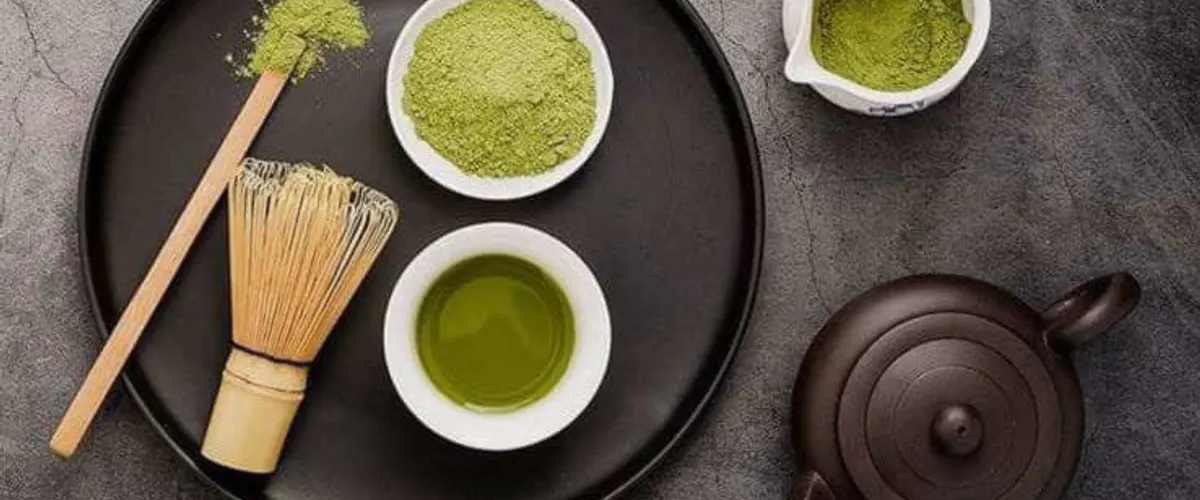
Matcha does not dissolve — it suspends. A bamboo whisk (chasen) moved in a brisk W or M motion, not a circle, breaks up the clumps and creates the fine foam. A small electric milk frother does the same job for a fraction of the price and effort.
A spoon works if you are decisive about it, but sift the powder first or you will be drinking lumps.
Iced matcha and matcha latte
Cold water will not disperse the powder — this is the reason iced matcha at home so often fails. The fix is order of operations: paste the powder with two or three spoonfuls of warm water first, whisk it smooth, and only then add cold water and ice.
For a latte, make that same smooth paste and pour the milk or plant drink over it. Oat drink is the usual choice because its sweetness balances the astringency; soy tends to curdle slightly against matcha’s acidity.
Storing it so it is still good in a month
Matcha is damaged by air, light, heat and humidity — which describes the average kitchen counter next to the hob. Keep it sealed, in a cupboard, away from the kettle steam. Refrigeration works but let the tin come to room temperature before opening it, or condensation will do the damage you were avoiding.
Usucha and koicha: two ways to make the same cup
Japanese practice distinguishes two preparations. Usucha — "thin tea" — is roughly a level teaspoon to 70 ml of water, whisked to a foam. It is what almost everyone means by a cup of matcha and what a café serves you.
Koicha — "thick tea" — uses double or triple the powder in the same water and is kneaded rather than whisked, producing something closer to a warm paste. It is intense, expensive to make, and unforgiving of anything less than premium powder. It is worth knowing the word so you understand why a recipe calling for four grams is not a mistake.
For a blend rather than a pure ceremonial powder, usucha proportions are the right starting point and koicha is not the intended use.
Common mistakes, in the order people make them
Boiling water. Covered above, and responsible for most bad first impressions.
Not sifting. Matcha compacts in the tin. A small sieve, or pressing it through a tea strainer with the back of a spoon, removes the lumps before water is involved. This is the single fix that makes a spoon work as well as a whisk.
Whisking in circles. A circular motion pushes powder to the edge of the bowl. The brisk W or M motion is not tradition for its own sake — it aerates.
Too much powder too soon. Starting at full strength is how people decide they dislike matcha in one sitting.
Storing it on the counter. Next to the kettle is the worst place in the kitchen: heat, light and steam at once.
Questions
Why is my matcha bitter?
Almost always the water was too hot. Let the kettle stand two to three minutes after boiling, and use a little less powder while you get used to the taste.
Do I need a bamboo whisk?
No. A small electric milk frother does the same job, and a spoon works if you sift the powder first and mix decisively. The whisk is nicer, not necessary.
Why does my iced matcha have lumps?
Because the powder went straight into cold water. Make a smooth paste with a little warm water first, then add the cold water and ice.
Which milk works best for a matcha latte?
Oat drink is the common choice — its sweetness balances the astringency and it foams well. Soy can curdle slightly against matcha’s acidity.